Refrigerator Not Cooling
Food becomes warmer even though the interior lights work and the appliance appears to be running. Condenser problems, fan failures, sensors, or refrigeration-system faults can affect cooling.
Residential Refrigeration Appliance Service
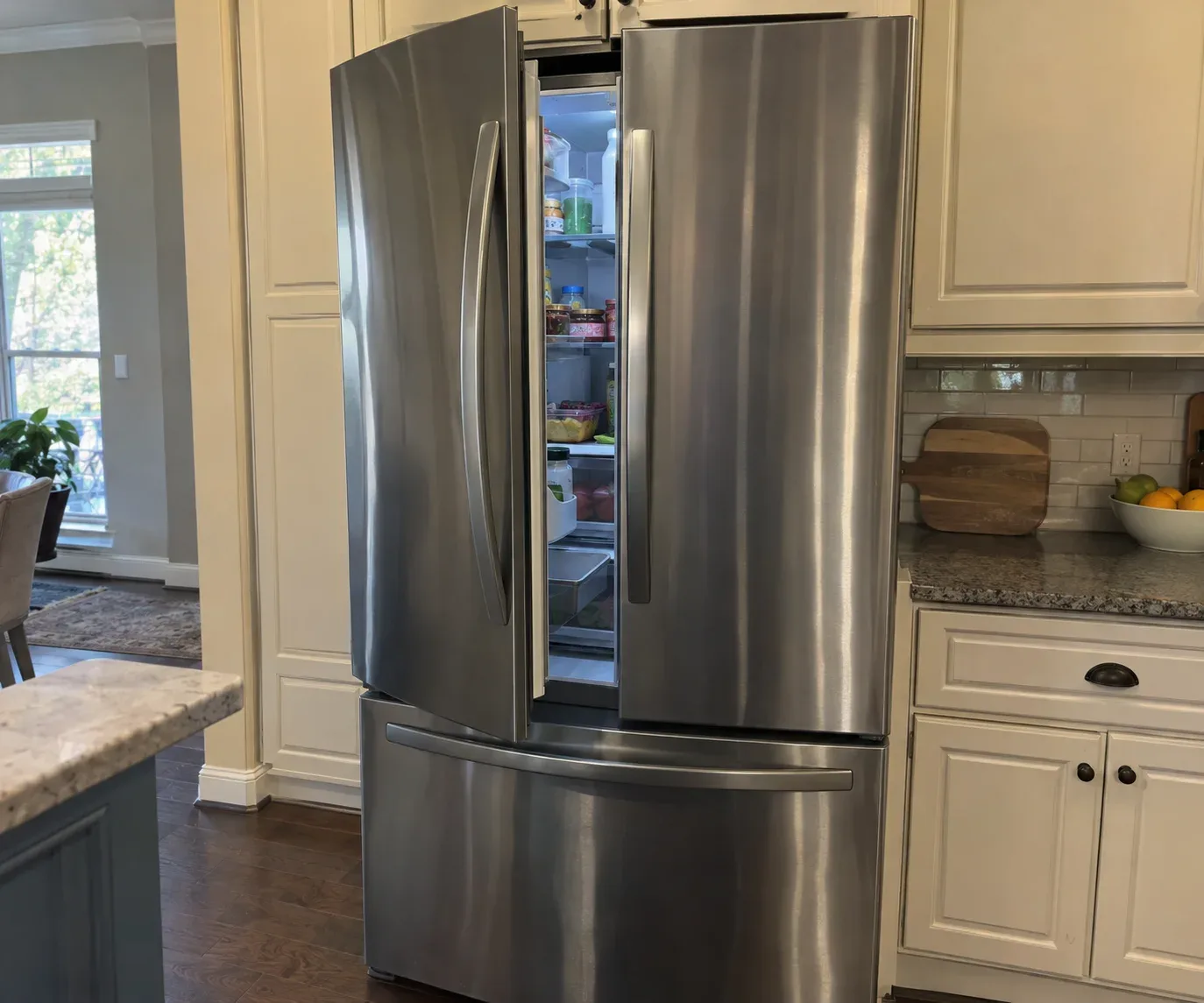
A refrigerator that cannot hold its temperature puts groceries at risk, while a freezer covered in frost can signal trouble with the cooling system. Appliance Repair Benbrook provides in-home diagnosis and repair for household refrigerators and freezers, including cooling failures, water leaks, unusual noises, and defrost problems.
Every day · 7:00 AM – 11:00 PM
Residential refrigeration diagnostics
Manufacturer-original replacement components
Insured in-home appliance service
Cooling and Freezing Problems
Cooling problems are not always caused by the compressor. Air circulation, temperature sensors, defrost components, and door seals all influence refrigerator performance.
Food becomes warmer even though the interior lights work and the appliance appears to be running. Condenser problems, fan failures, sensors, or refrigeration-system faults can affect cooling.
Frozen products soften or ice cream loses its firmness. The cause may involve restricted airflow, compressor operation, defrost faults, or temperature-control components.
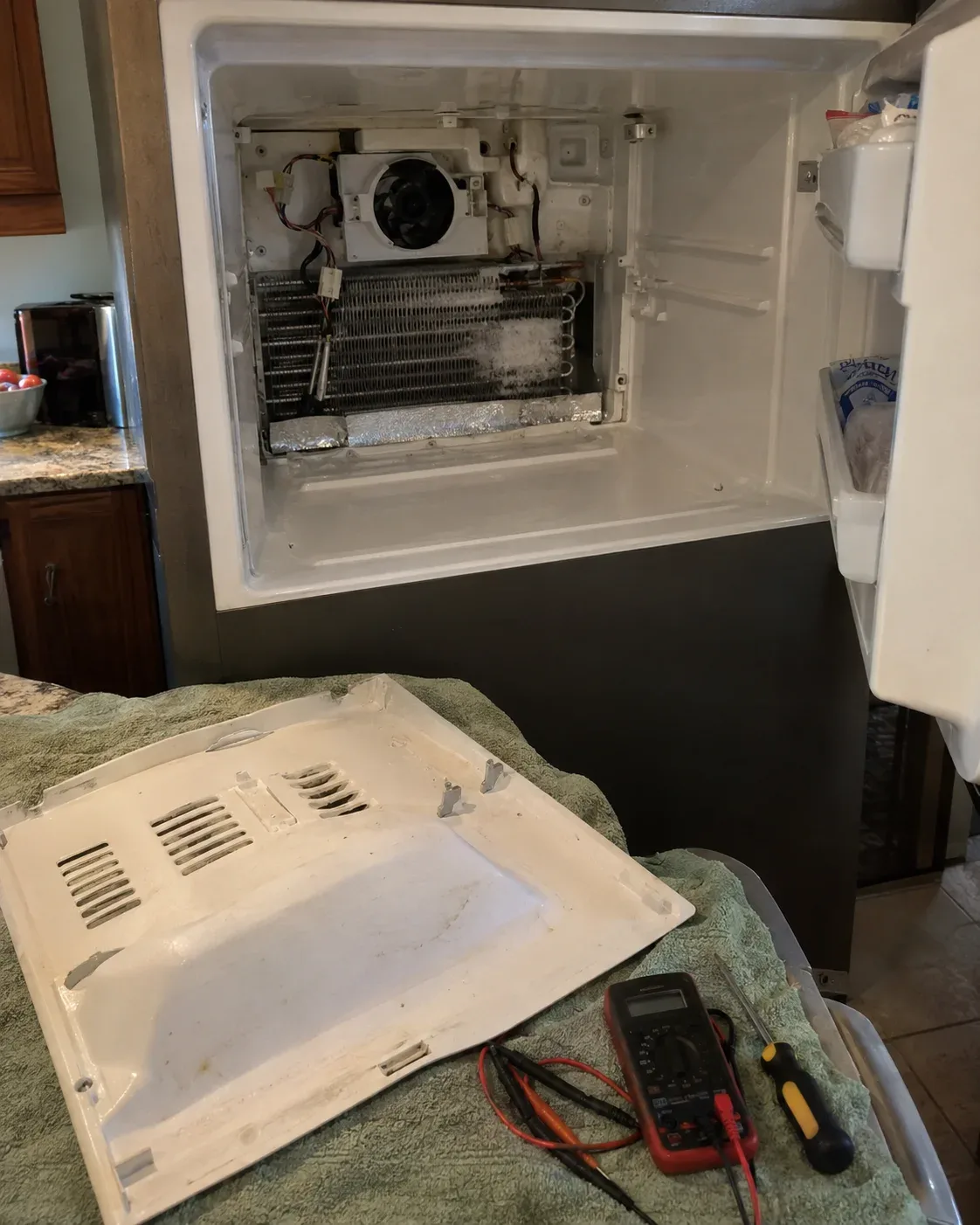
Thick frost appears around the rear freezer panel, shelves, or door opening. Defrost-system problems, air leaks, and deteriorated door gaskets may allow ice to accumulate.
Puddles near the front feet or behind the refrigerator may result from a clogged defrost drain, a damaged water line, or a leaking ice-maker connection.
Ice production slows, stops completely, or produces irregular cubes. Water inlet valves, ice-maker mechanisms, temperature conditions, and sensors are possible causes.
Persistent clicking, rattling, buzzing, or grinding can originate from fan assemblies, vibration, electrical start components, or compressor-related problems.
Different symptoms can occur together. Mention changes in temperature, frost patterns, and unusual sounds when contacting us.
Request Refrigerator ServiceRefrigeration System Diagnosis
A refrigerator must remove heat, circulate cold air, and manage frost without interruption. When temperatures begin to rise, the underlying fault may be electrical, mechanical, or related to airflow. Identifying which system is affected helps determine the required repair.
The compressor and condenser system help transfer heat away from the refrigerated compartments. Start components, condenser fans, and sealed-system faults can interfere with this process. Proper testing is needed before determining whether a major component has failed.
Cold air must move through the compartments to maintain consistent temperatures. A defective evaporator fan, blocked air passage, or malfunctioning damper can create warm areas even when part of the refrigerator remains cold.
Defrost heaters, thermistors, electronic controls, and related components regulate ice accumulation and operating temperatures. A failed component may allow the evaporator to become covered in frost, reducing airflow and cooling performance.
From Diagnosis to Repair
Refrigerator problems often develop gradually. Temperature changes, excessive frost, and interrupted cooling provide useful details before an in-home inspection.
Explain the refrigerator or freezer fault, provide the appliance information when available, and book a service appointment.
A certified technician examines the appliance, identifies the fault, and discusses the proposed repair and associated costs before work begins.
The agreed repair is performed according to the diagnosed problem, with replacement components selected for the appliance when required.
Certified appliance repair technicians, genuine OEM parts where applicable, and fully insured in-home service support our approach to residential refrigeration repairs.
Arrange Refrigerator RepairResidential Refrigeration Equipment
Compartment arrangements, cooling circuits, ice-making systems, and electronic controls differ between models. These design differences help determine how a refrigeration fault should be evaluated.
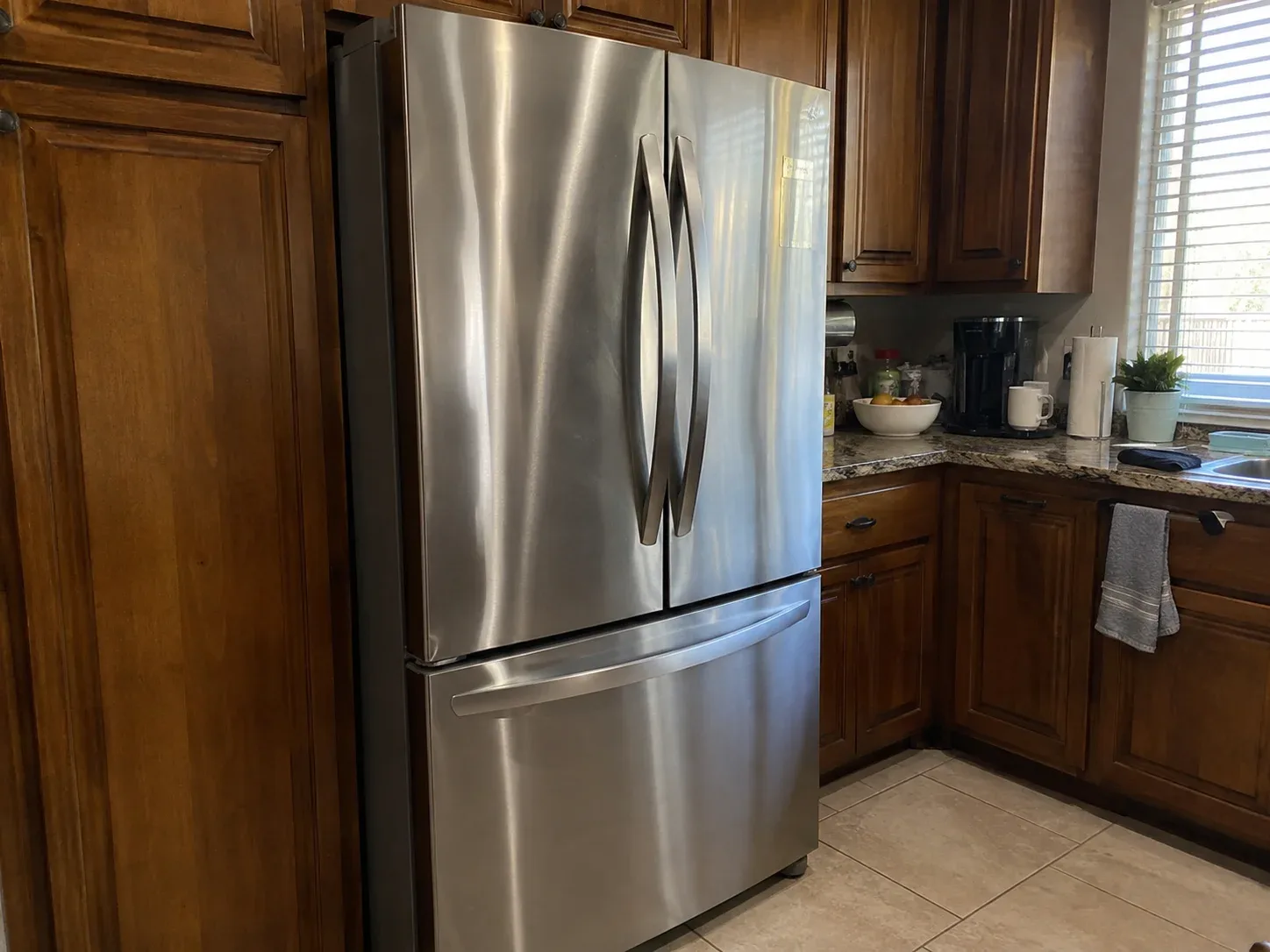
Combination refrigerators may use multiple temperature sensors, airflow channels, evaporator arrangements, and electronic controls. Larger door systems and built-in ice makers introduce additional components that can affect operation.
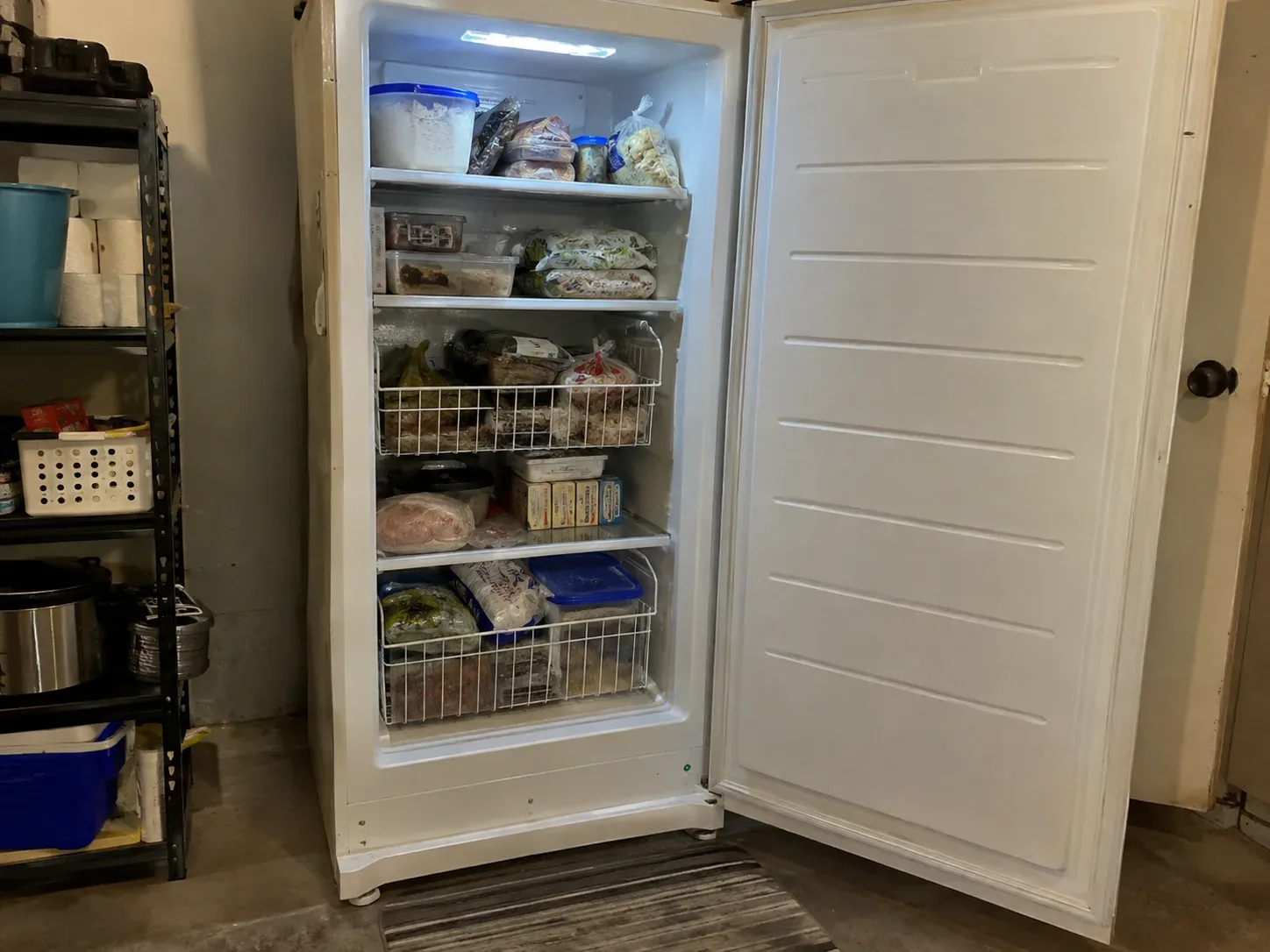
Standalone freezers are designed for continuous low-temperature storage. Depending on the model, they may use manual or automatic defrost systems, different thermostat arrangements, and distinct door-sealing designs.
The model number is especially useful for refrigerators with multiple compartments, inverter compressors, or specialized ice-making systems. It helps identify the configuration being inspected.
Local Refrigeration Service
Refrigerators in Benbrook homes can be installed between kitchen cabinets, positioned beside pantry walls, or connected to water supplies behind the appliance. Freestanding freezers may be located in utility rooms or garages, where surrounding temperatures can differ significantly from those inside the home.
Our in-home service focuses on residential properties in Benbrook, including Westpark, Whitestone Ranch, and nearby neighborhoods. When arranging service, mention whether the refrigerator is built into cabinetry, has a water dispenser, or shows different temperatures between its compartments.
Appliance Repair in Benbrook, TX →Main ZIP Code
76126
For an address outside the listed neighborhoods, call to discuss service availability.
(817) 745-6338Refrigerator & Freezer Questions
Learn about temperature problems, compressor concerns, frost buildup, ice makers, repair costs, and preparing for a refrigeration service visit.
The compressor may be operating while cold air is not circulating properly. Condenser fan faults, evaporator frost, damaged door seals, and temperature-control problems can also reduce cooling. An inspection is needed to identify the cause.
On models that distribute cold air from the freezer, a failed evaporator fan, blocked air passage, faulty damper, or defrost problem can prevent the refrigerator compartment from cooling correctly.
Heavy frost on the interior rear panel of an automatic-defrost freezer can indicate a failed heater, temperature sensor, or defrost control. Door-seal problems and moisture entering the compartment can also contribute to ice buildup.
Not necessarily. Clicking may come from normal switching, a start-device problem, or another electrical component. Repeated clicking accompanied by poor cooling warrants diagnosis, but the sound alone does not confirm compressor failure.
Repair cost depends on the refrigerator model, the diagnosed fault, replacement components, and the work involved. A failed fan, damaged water valve, and compressor-related problem can require very different repairs. Costs are discussed after the appliance is assessed.
An ice maker may stop producing ice when the freezer temperature is too high, water flow is restricted, or the ice-making mechanism develops a fault. Water inlet valves, sensors, and control components may require inspection.
Consider the refrigerator's overall condition, energy use, diagnosed fault, and repair cost. Replacing a fan or sensor may be more practical than replacing the appliance, while extensive sealed-system damage can change the decision.
Check the temperature with an appliance thermometer. Refrigerated food should generally be kept at 40°F or below, and frozen food at 0°F. Move perishable food to safe storage if temperatures rise. Discard food that has been held at unsafe temperatures according to USDA food-safety guidance.
Note the brand, model number, appliance configuration, and when the temperature problem began. Mention unusual noise, frost buildup, leaking water, or changes in ice production. This information provides context for the in-home diagnosis.
Residential Cooling Appliance Service
If your refrigerator is struggling to maintain safe temperatures, your freezer is developing excessive frost, or the ice maker is no longer operating normally, contact Appliance Repair Benbrook to arrange an in-home inspection.
Mention the appliance type, brand, and model when available. Details about changing temperatures, water leaks, and unusual sounds can also help describe the problem.
Complete the fields below to submit an appointment request.
Thank You!
Your message has been sent successfully. We'll get back to you shortly.
Thank you. Your request has been received.